Confessions, Culture & Cinema
The Week in Review
The Ultimate Guide to Entertainment, Culture & Creative Trends, Fashion, Style & Editorial Commentary
Stay connected with Made For the Spotlight Magazine each week for exclusive features, breaking entertainment and culture stories, original podcast episodes, and behind-the-scenes content. Be the first to discover upcoming show dates, new dance compilations, special premieres, and exclusive previews of the latest creative projects from the world of Rosepulse Rewind, Confessions of a Freud Girl: Unfinished Therapy, and more.
As part of Confessions of a Freud Girl: Unfinished Therapy, a brand-new dance compilation will debut in 2026. Titled The Last Imperial Flower, the collection brings together a curated selection of music and artists in a cinematic journey that blends expressive movement, visual storytelling, and contemporary performance. Designed as a companion piece to the podcast series, The Last Imperial Flower explores themes of memory, identity, beauty, and transformation through an immersive fusion of dance, music, and creative expression.
Rosepulse Rewind represents an extension of the Child Is Gone Podcast Series, broadening its themes through media commentary, cultural analysis, and original storytelling. On the latest episode I explore the upcoming film Hamnet, directed by Chloé Zhao, and discuss what makes this adaptation so compelling. The episode also reflects on the enduring legacy of William Shakespeare, the creative process of studying and performing monologues, and my experience writing The Loves of Ondine, an original feature screenplay. Join me for a conversation about cinema, storytelling, classic literature, and the creative journey behind bringing new ideas to life.
Capturing the Cultural Moment: Contemporary Events Through an Abstract Lens
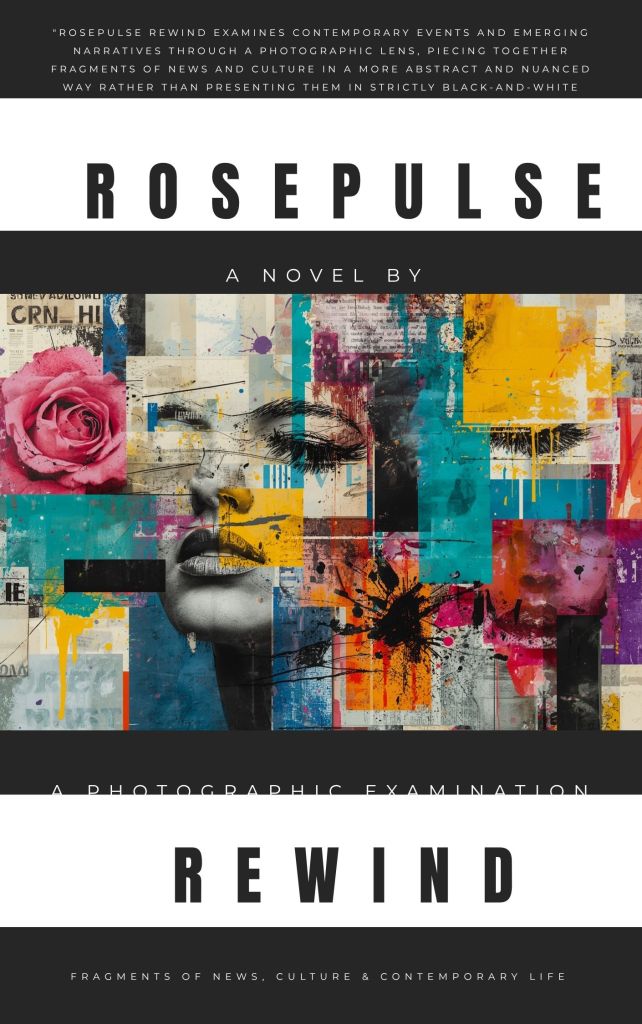
This podcast explores contemporary events, media, and pop culture through an independent and reflective perspective. Rather than presenting stories in strictly black-and-white terms, it embraces a more abstract, nuanced approach that examines the ideas, cultural movements, and narratives shaping today’s world. Each episode invites listeners to consider multiple perspectives, blending thoughtful commentary with creative storytelling to illuminate the complexities behind the headlines and the evolving landscape of popular culture. This podcast series features, both montages of images, and also, of dance compilations called Rosepulse Rewind Presents: Cinematic interludes, Fading Into the Spotlight
The Devil Wears Prada: A Learning Curve or a Decade-Long Premonition of What Was to Come?
The Ultimate Guide to Entertainment, Culture & Creative Trends, Fashion, Style & Editorial Commentary
The Week in Review
I had often times, pictured, the whole premonition I recently started to find, after rewatching the Devil Wears Prada this summer it was definitely admiring Andy Sach’s style in the second half of the film that takes you through Andy World, and also, her fashion transcendence, and transformation that had, encapsulated the film altogether.
I had discovered, so from this particular part in the film, not simply in, , watching Andy Sachs wearing an emerald coat, cheetah gloves, walking down the street as though she had shaped somehow your own new perceptions about the fashion world and the industry, itself and where this particular montage, had been one that would ultimately set the tone, for what, would actually come later on/
I think the Devil Wears Prada is where this movie becomes one that, proves quite monumental in the idea of where I had often times, pictured, through the whole premonition I had found about the devil wears Prada, one that takes you through the spectrum about the Pre-social-media boom and Mid-2000s and also The Rise of the Digital Age
I recently started to find, after rewatching the Devil Wears Prada this summer it was definitely admiring Andy Sach’s style in the second half of the film that takes you through Andy World, and also, her fashion transcendence, and transformation that had, encapsulated the film altogether.
I had discovered, so from this particular part in the film, not simply in, watching Andy Sachs wearing an emerald coat, cheetah gloves, walking down the street of New York City as though she had shaped somehow your own new perceptions about the fashion world and the industry, itself.and where this particular montage, had been one that would ultimately set the tone, for what, would actually come later on where this movie becomes one that, proves quite monument from a pop cultural approach.
And how this seemed, to be, one with where you can get a sense of as Andy is fashion assistant, at the exclusive Runway, where Miranda Presitely presides. had been, a persons whom how it seemed it been in understanding more in depth, than simply Miranda Preistely as through the eyes of many fashion critics perhaps possessed a kind of, persona, and magnitude that actually blended in with the, decade period, and era of, Emerging professionals, Digitally connected and The editorial landscape of the mid-2000s
The emerging digital media era and some of what had, actually been the realization and materializing of what we would see happen later on with films like The Social Network about Mark Zuckerberg with the rise of Facebook and creation of Social media. And it seemed, this had become the kind of curtailing through some of what, we consider to be apart of our own ability to navigate the world of, technology and social media, and how it is with any position, where one’s actual, identity can slowly erode, and that it seems we have a hard time dealing with the side effects of social media, and actual consumption of it.
And in my opinion had been where, you can see, how and what, would ultimately be something that defined the film. I think Leslie Fremar, speaks a great deal about her experience, as a fashion assistant for Anna Wintour, for Vogue Magazine, and also, gives, a lot of interesting stories, that had been ones that encapsulated a new outlook and perspective on Miranda Priestely based on Anna Wintour.
an avant-garde futuristic narrative
Culture, Commentary & Contemporary Style
The Week in Review
In the winter-worn library of Beagard’s forgotten quarter, Eglantine Prue leaned over the dust-laced journals of Haung Yuanyong — one crisp, page turned to a clean blank margin, and where the and still filled fine pages inside one journal that read atop, it Huang Yuanyong: From Progressive Party Advocate to Influential Journalist and Reformer contained writing, though in and inkwell and pen, written by Huang himself, and that this had been most, astonishing, to Eglantine, and how it had seemed that Haung had been the last known investigative reporter of the pre-Threshold world and that you would find through such, variance, resistance and discord within the Quing dynasty. And how Eglantine had come close to what had seemed, having somewhat of an esoteric connection to the Quing Dynasty.
As that of the library, seemed most, probing for that of such a solitary place. And where as she read with each, parcel of, insolence in the small sanctuary for a book grove. The pages crackled with urgency, each paragraph an elegy to truths the opulent world that had been once buried inside their furrow and corrugation. It was through Haung’s prophetic reportage that Eglantine first came to understand the systems that which pervaded around her — all that were ecological, political, spiritual. There inside, she had, found, a newspaper clip on the old journal
Haung had chronicled everything and thus that it seemed her own life, had seemed, once filled with peril and how as though he had been controlled by her father Allen. And for how in and of the days in Beagard, the place once known as Savannah, there’d had been that of great dismay with much happening with climate change and also, that it been her brothers and sisters whom become quite, encapsulated in that of what was happening in Beagard, and first it came with the banning of books by the organization gamma and the, from the slow erosion of riverways in Beagard that caused a flood and which drench and suffuse all the providence, that had lasted for several months collapsed in a future she could not touch but saw in chilling detail through Rune’s Sight.
Rune Prue, Eglantine’s older sister and the keeper of inherited visions, by and with, how’d this had been, in had seen the moment— there alike it been another woman by the, name, of, — who’d seen that of, many inudations, and how everything started to change, when a flood in our domicile, had taken place, and how that of Rune would begin, to, to have visions.
And how’d she She had woken in Beagard, the city of roots and rot, screaming of falling ash and impossible fire. From that moment, her life split: half grounded in Beagard’s mossy reality, half haunted by a world undone by greed and spectral power. And that unto it, her father, Allen that in many of the near days she’d rewalized, that, some of the,
Eglantine, with Haung’s notebooks in hand and Rune’s visions in her heart, stood at the breach between what was lost and what must be saved. Her own sense of, detection had, thus, been where something of great perturbation came from understanding the Ghoul — the invisible force haunting Beagard’s walls — but to confront it, name it, and bind it to the truth that Haung had so meticulously recorded: that the collapse of towers begins in the unseen fractures of policy and poisoned earth.
Fame, Performance, and the Search for Identity: Lady Gaga’s The Fame and ARTPOP Eras
The Ultimate Guide to Entertainment, Culture & Creative Trends, Fashion, Style & Editorial Commentary
The Week in Review
When Lady Gaga emerged onto the music scene with her debut album, The Fame, she quickly became one of the most recognizable figures in popular culture. With chart-topping singles, extravagant fashion, and a carefully crafted public persona, Gaga transformed herself into a global phenomenon. Yet beneath the glittering surface of celebrity culture, her work often explored deeper questions surrounding identity, self-perception, and the psychological costs of fame.
Released in 2008, The Fame was more than a collection of dance-pop anthems. Conceptually, the album examined society’s fascination with celebrity and the desire for recognition. Songs such as Paparazzi and Poker Face explored themes of performance, image construction, and emotional concealment. In many ways, Gaga’s early work reflected a broader cultural phenomenon in which identity becomes increasingly intertwined with public perception. The album suggested that fame is not simply a status but a psychological experience shaped by validation, visibility, and the pressure to maintain a particular image.
From a mental health perspective, The Fame can be interpreted as an exploration of identity formation in a media-saturated society. Psychological theories of self-concept suggest that individuals often construct multiple versions of themselves depending on social context. For celebrities, this process becomes amplified, as the distinction between the private self and the public persona can become increasingly blurred. Gaga’s artistic persona represented both empowerment and performance, raising questions about authenticity and the emotional consequences of living under constant observation.
These themes became even more pronounced during the release of ARTPOP in 2013. While commercially divisive upon release, ARTPOP has since been reevaluated as an ambitious exploration of creativity, fame, and self-expression. The album’s title itself suggests a fusion between high art and popular culture, challenging conventional boundaries between artistic experimentation and mainstream entertainment.
Throughout the ARTPOP era, Gaga appeared to grapple with the tension between artistic identity and public expectation. The project arrived during a period of intense scrutiny, and many critics noted the pressure placed upon artists to continually reinvent themselves while remaining commercially successful. This dynamic can contribute to what psychologists describe as an identity crisis—a period in which an individual struggles to reconcile competing aspects of the self.
An identity crisis does not necessarily indicate psychological dysfunction; rather, it often reflects a process of questioning personal values, goals, and self-definition. In Gaga’s case, ARTPOP can be viewed as an artistic attempt to navigate these questions publicly. The album embraced contradiction, experimentation, and transformation, reflecting the complexity of identity in contemporary culture. Rather than presenting a stable image, Gaga offered a fragmented and evolving portrait of the self.
The connection between mental health and creativity has long fascinated researchers. Creative individuals often engage in continuous self-exploration, using artistic expression as a means of processing emotional experiences and existential questions. Gaga’s work during both The Fame and ARTPOP eras illustrates how popular music can function as a vehicle for examining identity, vulnerability, and psychological resilience.
Ultimately, these two eras reveal more than the evolution of a pop star. They provide insight into the pressures of fame, the construction of identity, and the universal human desire for self-understanding. Through elaborate performances, provocative imagery, and ambitious artistic concepts, Lady Gaga transformed personal and cultural anxieties into a broader conversation about authenticity, mental health, and the search for meaning in an increasingly mediated world.
Breaking Stories & Creative Perspectives
From the world of the Child Is Gone Podcast Series comes Rosepulse Rewind.
I think it is, in that one thing that stood out to you, whenever you saw, a photograph or got a glimpse of something that seemed either surreal, or, in many ways, unique. I think it is in looking closely at photographs of Edie Segwick at the Factory, in particular, Edie Sedwick and Andy Warhol standing against the backdrop of the Empire State Building this photograph taken by, David Mcabe 1964.
And, and also, where, she, had been this sort of nymph glamour girl, one that, had embodied, the type of modern,/contemporary, new, young starlet, that I explore on my latest podcast, and, reading Edie: American Girl, by Jean Stein,. When Edie Sedwick entered the factory, And Learned that seems so rare, and different, and unique. I did an episode of my podcast Rosepulse Rewind, in episode 26 that where I talked about Edie Segwick becoming famous how she had, grown up in a background that seemed quite,
In this week’s The Ultimate Guide to Entertainment, Culture & Creative Trends the latest podcast, I write about in the archives For Made For the Spotlight Magazine Rosepulse Rewind takes the Child Is Gone Podcast Series in an exciting new direction. On episode 26, I discuss alot about Edie Sedgwick and how she came from an aristocratic family background dating back to the 1930s. What fascinated me was the contrast between the world she was raised in and the image she later became known for — someone who seemed to define an entirely new kind of cultural beauty and artistic presence.
I think it is that one thing that stands out to you whenever you come across a photograph or catch a glimpse of something that feels surreal, or in many ways, entirely unique. For me, it was looking at photographs of Edie Sedgwick at the Factory. She carried this nymph-like glamour — embodying a modern, contemporary kind of young starlet that now feels incredibly rare, distinct, and singular.
In episode 26 of my podcast I talked about Edie Sedgwick and how she came from an aristocratic family background dating back to the 1930s. What fascinated me was the contrast between the world she was raised in and the image she later became known for — someone who seemed to define an entirely new kind of cultural beauty and artistic presence.
“Andy Warhol and his ideal of stardom, the whole understanding, the thing that could happen when you grace a magazine, it was, the definitely about I think the place that Edie had come, from an aristocratic, family, I had it was how Edie being apart of the Factory it was, the movie/stardom, that happened in the 30s something of, the feeling of the aristocratic background to grow up in, that whole idea of glamour, and, I think she had been that type of modern muse, or that type of glamour girl, that stemmed from the forties, I think it was interesting,
Girlhood Archives
The Ultimate Guide to Entertainment, Culture & Creative Trends, Fashion, Style & Editorial Commentary
I think it was, in first, talking about Fleabag, and the most interesting thing. Before I had, gushed over how, I used to listen John Mayer’s No Such thing, constantly, it was getting into the Prime television, Show Fleabag, starring Phoebe Waller Bridge. And that I would describe more to feeling her own life, was not golden but a socialites life, but gave it off the tragic and underlining thing. And in a kind of diatribe, describing moments as her confessing, that I had, thought about her truthiness, versus, the human condition, and versus rendering the whole, overall nature of the show as patriarchal. And the overall, gist to this, in a song you probably thought I never heard of, The Sundays, I feel Fine, and how this could be the actual transition and inadvertent catalyst, in itself, involving the, dissemination of mass consumption and then with a sudden plot twist, a friends suicide.
Decoding Decades
The Ultimate Guide to Entertainment, Culture & Creative Trends, Fashion, Style & Editorial Commentary
I think I discovered most of my own experiences when it came to fashion, and also style, and also having a unique perspective. It was around the early 2000’s and entering into 2006, where I would say this particular period was one that I had become fascinated with not only through fashion, but also music as well. especially as it related to some aspect of finding a job, and or needing to, create your own opportunities. I think this particular juncture, had also, been where, I had found many ways, in order to think about my dream job, profession, and own aspirations.
At this particular juncture, I also began to reflect more seriously on my dream career, professional ambitions, and long-term aspirations. Fashion and music became more than personal interests; they served as creative and intellectual influences that shaped the way I envisioned my future and the possibilities available to me.

“Gender Fatigue in the Streaming Era”
The Ultimate Guide to Entertainment, Culture & Creative Trends, Fashion, Style & Editorial Commentary
The song “Ain’t It Fun” by Paramore can be interpreted as a commentary on the act of observing and narrating lived experience. In this context, relationships are framed through a lens of ambiguity and perceptual distortion, where the attributes of a romantic partner may appear both perplexing and unstable, akin to the narrative logic of a Divergent film starring Theo James and Shailene Woodley. This uncertainty becomes symbolic of broader binary norms and systems of social categorization, where identity is reduced through rigid classificatory frameworks that shape how individuals are understood within cultural discourse in my opinion can lead to gender streaming fatigue with many shows like Fleabag, ones where, the main character, Fleabag, throughout the series show, a kind of, sophistry through and of, each dating and relationship experience.
Romance, in a way, comes across as a form of parody in which Fleabag replicates anecdotes and experiences of social labelling, particularly through a preconception of, binary norms, and for example. of women versus men. This analogy reflects the pressure to appear normative, rational, and socially acceptable within the professional sphere.
I had discovered through this analogous, in the ideal of needing to, and get through this type of sound based catharsis through some fortification. And perhaps, maybe bit by bit, the auditory balm and where, Music and the whole, feeling of an, Intellectual spellbound state become the kind of mental absorption. And whether you are a fashion girl, or whether in 2006, you were still trying understanding your own boyfriends personality traits is something that songs like, the moon-pools and caterpillars Ren seem, most resonant of. and what the Devil Wears Prada tells us.
Reframing Pop Culture
The Ultimate Guide to Entertainment, Culture & Creative Trends, Fashion, Style & Editorial Commentary
I think it was, in one particular thinking about what were some interesting memories, I had associated with what I had, found it was in listening to music from the 2000’s in particular the pop era, with Britney Spears, and Madonna, and their reign in the pop world that seemed like it would continually last and sustain itself.
I believe it was Britney’s In the Zone album that significantly changed my perspective. I vividly remember listening to “Me Against the Music” and “Touch of My Hand,” and from that point on, I found myself returning to those songs repeatedly. They became some of the tracks I listened to most often, and the In the Zone album had a lasting influence on my musical tastes and creative outlook.
Neo-noir Spacefaring
Didier
This Week’s Editorial Report
Arthur Didier had heard the flicker recrudescence from the outside of his retirement home. Where, that had spurned were, mere reverberations, of a bedraggled and rumpled, gust of, wind coming towards the, circumferences of, his nostrils. And on Sun Avenue, where so had stood many treelined houses, stood, overlooking Street edge Promenade Flagstone path and how so, pruriently they had been ones of hushed dignity and after many years something through and in of, a great consternation had began to digress with Arthur Didier.
And that it seemed there had been, outside in the darkness a scarlet red car had been moving towards steadily and though the driveway. And where, there a light, , had shone, from the outside. As it had been, the, that of a bannerol that stuck behind it and said, THE MIND IS A MACHINE. . And where the, window, to the retirement home, had shone such a flicker from the , exterior. The passing breeze evoked a deep, almost inexplicable longing with such, proclivity, and through and of an inauspicious, saturnine, kind of, sepulchral, and, effulgent light, coursing through it’s pall and inchoate.
You can find the one chap Didier, sitting in so much on a chair reading a book, by Charlotte Bronete, and, in his segment of and part of the quiet wing. A restless stirring that seemed to pulsate against the quiet walls. It crept in with embryonic, earnestness, through the narrow windows like a half-remembered echo, carrying with it the breath of passing lives and own Didier’s decrepit life in an period and primordial time before. And that unto such, debility he would become enfeebled and spent. And where the murmur of a world that no longer waited for him. For a moment, Arthur sat still, listening, as the sound unsettled the hush of his room and awakened something long dormant within him, a faint reminder that even in retreat, the world had a way of returning.
And how Arhtur Didier he now found himself paralyzed by a deeper dread — a scent too old to be earthly, but one of mass and small particles, thus had turned into, singed and ashen soot and decay. And in where what had filled his own unsettled spirit, , like in where the kind of wilted ember colored roses buried beneath centuries of dust and grief. So much of what had, secreted from them had been one of, a passing thought and slight conjecture. And that this seemed, to be as it were with, whispering secrets no living soul was meant to hear. Pulsing. Clanging. Lurking, Shuddering. Undulating.
With a harsh and mechanical recurring rhythm that had been through the beating of his own heart, and a while, he thought he heard his own palpitations seem to rattle his nerves, and equilibrium And that he suffered from back aches, and where he often kept his book, underneath his bed pillow.
And a while that of Quiescence and Taciturnity and muted clam, had been that as it were, as wavering and unfaltering as that of some elucidation. And you can see, his, own cloak and dagger and watchfulness had gave the kind of squalor with such, a grip where Didier had tried to jerk himself out of his own, gelid disposition. And that with each jerk, and turning, he’d looked as though he’d seemed, as unbound, as that akin to the behavior of an animal in captivity
When he’d known with that kind of persnickety, of an earthquake that had, caused the marvel. And, though, Arthur didn’t believe in any bit of peculiarity, and that he kept a book Villette by Charlotte Bronte of Freud’s at during the s night. Even that it seemed an earthquake seemed the most conceivable explanation.
During the chapter, in a book, he’d had to salvage as many times, that of single strand of, he used it as a bookmark. And that it been the garrulous male nurse who’d watched over his lap with the rumpled book on it. And, that he’d lurched, with it, and where, the pages inside went to such a crinkled crease, He began thrashing about, like a wild goose trapped in the confines of his bedroom lair.]
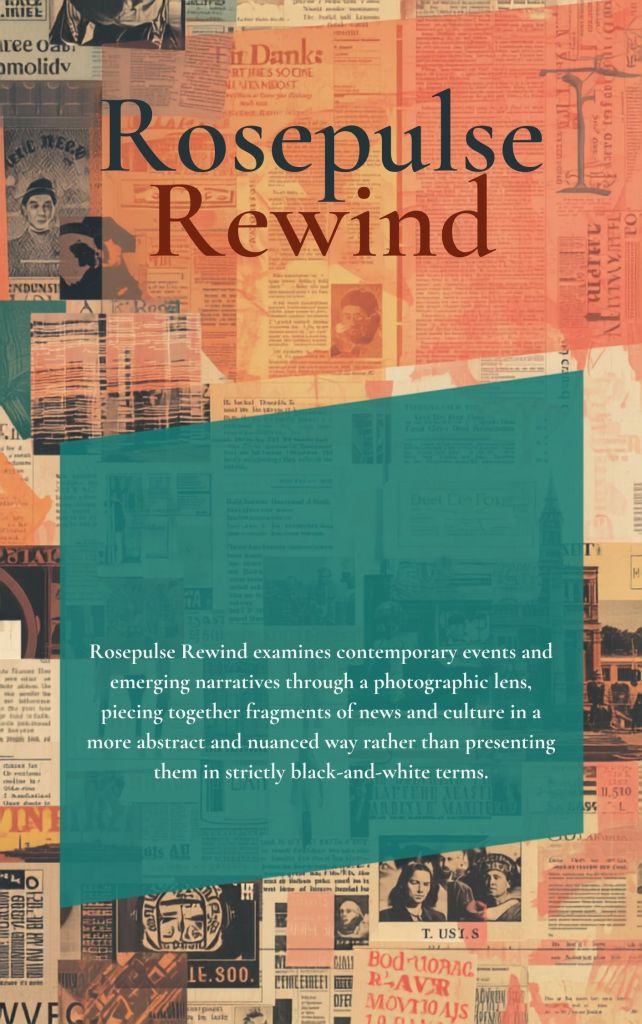
Rosepulse Rewind further develops the concepts introduced in the Child Is Gone Podcast Series, offering new stories and creative commentary.
Rosepulse: The Prelude
In these separate episodic stories, each one conveys a sense of broadening the lens by discussing the significance of music as a genre that takes a deeper look into the elements that aesthetically draw us to movement, the emotions we experience, and the feelings we internalize as we navigate through our own stories independently. These episodes explore both aspects of being a recording artist and the emotional connection that comes with creating, performing, and experiencing music.
Transitional Themes
This Week’s Editorial Report
The Ultimate Guide to Entertainment, Culture & Creative Trends, Fashion, Style & Editorial Commentary
I think that, with so much music and so many songs to choose from, my playlists back in 2023 and 2024,, and I remember talking about in how I had geared myself toward discovering new song titles. It all started when I began to genuinely appreciate a song, and since then, I’ve grown so much as a music fan. I’ve also felt that good songwriting encompasses many elements — not just being racy or evocative, but also emotionally resonant and meaningful.
Listening Backward Through Film
Breaking Stories & Creative Perspectives
This Week’s Editorial Report
So much of listening to music feels tied to memory. Art imitates life, and music becomes one of its clearest reflections. I think that feeling carries across mediums like cinema and film too. Growing up, Vanessa Carlton always reminded me of the movies I watched obsessively as a teenager — especially Matilda. There was something about the softness, melancholy, and quiet wonder in her music that seemed to belong to that world. I’ve always carried that connection with me whenever I think about that film.
The Psychology Behind the Stories
a quantum-inspired cinematic experience
The Ultimate Guide to Entertainment, Culture & Creative Trends, Fashion, Style & Editorial Commentary
This Week’s Editorial Report
I think that, when it came to Compiling and producing my new podcast series, I created this year, I had, begun to, chronicle my own experiences throughout each periodical, month, where, I discuss some very interesting new topics. I think for this series, it was all, ones that, encompasses personal stories, about mental health and battling bipolar disorder. In my song selection, I had, started with bands like the French police, and had discovered songs like Illinois, and Persi, and also the waiting room by sjowgren waiting room and Yam Yam by No Vacation.
And that while still in the creative process, alot of things, can go wrong. I had discovered while creating each new project separately, I think then with all had seemed, most, formulating that I had, begin with, the actual monumental task of hard core editing, and inserting digital images, that I thought I didn’t need. And though I had found that every little detail seemed, crucial, and that it all had been till finally after several edits, feeling that, I had a sense and idea of where I wanted this podcast series to go, and then, I had finally, after I did, a promo for Confessions of A Freud Girl Unfinished Therapy, and that, I think it was, where, I finally thought, about incorporating more and more as what I had thought was essential and quite, important in each part and, component of this project I had begun. since March.
For this podcast series, I will, talk about some of many my own everyday challenges with dealing with bipolar disorder, and also, taking up dance as a new hobby, and writing about, what I had, discovered were some of, my own techniques in learning lyrical dance, in each segment I dance to artists like ,John Mayer, Sara Barielles, Adele, and Florence Welch and the Machine, and the Wreckers. I think it was in discovering so much through lyrical dancing that, I had, actually began to feel even that with more practice, my own dance style, and gradually improved and that, I actually started to, develop a better sense of, how I had actually seen a difference, simply by practicing everyday. and developing a new mindset.
I
Chapter One: The First Beat
 Made for the Spotlight